
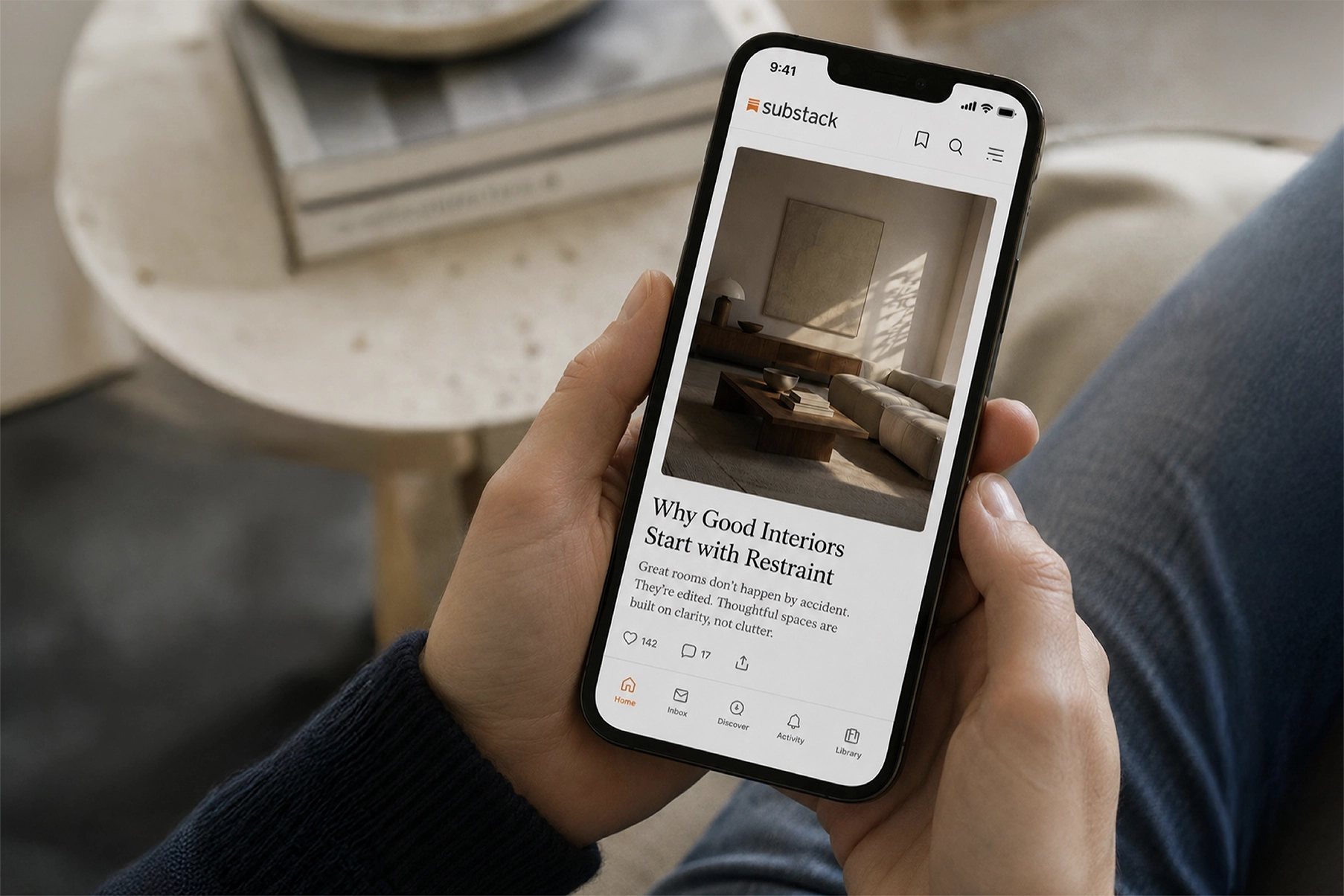
The Rise of Substack
Substack has rapidly established itself as one of the most talked about platforms for publishing. What started as a relatively simple way for writers to send newsletters directly to readers has developed into a significant alternative to traditional publishing, giving writers the opportunity to build an audience, retain creative control over their own content and, crucially, monetise it.
The model is straightforward. Writers publish content through Substack, readers can subscribe to follow their work, and writers can choose to offer some or all of that content for free or behind a paid subscription. Readers might pay a monthly or annual fee to access additional articles, recommendations or other content from a writer they particularly like.
It’s a simple idea, but one that has considerable appeal at a time when traditional publishing is under pressure. With more and more writers working in a freelance capacity, Substack offers them an additional revenue stream, as well as full creative control over their editorial output.
For newer voices, it has democratised the writing industry and offered a route into publishing without needing to first secure a job at a traditional media platform. For established writers, it can offer the opportunity to take an existing readership with them, develop their own editorial identity and earn directly from the audience they have built.
The model has made its mark on interiors, with writers and editors who have built their careers in the sector having established their own Substacks. For some, it is an extension of the work they already do; for others, it is an opportunity to develop a completely independent editorial voice and build a readership around it.
This shift is significant because, traditionally, an interiors writer’s audience has largely belonged to the publication they write for. Substack changes that dynamic. A writer can build a readership around their own name, perspective and expertise, rather than being one voice within a wider editorial title.
For readers, that creates a different kind of relationship with interiors media. They can choose to follow the writers whose work they particularly enjoy, rather than subscribing to a publication as a whole. It puts the individual voice at the centre and gives readers a direct way to support the journalists whose work they value.
There are clear benefits for writers, too. Beyond the potential income, Substack offers a degree of editorial freedom that can be difficult to find within traditional media. Writers decide what they want to cover, how often they publish and what they want to offer their readers. There is no commissioning process to navigate and no need to fit an idea into an existing editorial calendar.
But the model is not without its challenges.

For readers, a monthly fee might seem relatively small in isolation, but if someone follows several writers, those subscriptions can quickly add up.
For writers, meanwhile, building a paying audience is far from guaranteed. Substack has made publishing accessible, but that also means the platform is increasingly crowded. Having an interesting perspective is not necessarily enough to persuade readers to pay for it every month. Writers need to publish consistently and offer something that feels distinct from the huge amount of free content already available online.
Whilst traditional publications have layers of editing and commissioning behind them, independent publishing removes much of that infrastructure. The freedom to publish without an editor can be one of Substack’s biggest advantages, but it also means the responsibility for the quality and accuracy of the work sits largely with the writer. Additionally, it means readers are paying for one voice or point of view and not a curated collection of different voices, opinions and perspectives.
For interiors media, this creates an interesting tension. Established design publications continue to offer the scale, editorial experience, authority and variety of perspectives that come with a recognised title. At the same time, Substack gives individual writers the opportunity to build something of their own alongside, or instead of, contributing to those publications.
It also raises an interesting question about what readers are paying for. In a world where interiors content is widely available for free, the value of a paid Substack is not simply the information itself. It is the writer’s perspective, expertise and voice and the fact that readers have chosen to pay for more of it.
This is perhaps the most significant development Substack has brought to publishing. It has made the individual writer, rather than the publication, the destination. For interiors, where established writers and editors can already have significant followings of their own, that shift has the potential to change how audiences are built and how editorial work is funded.
Whether every Substack will succeed is another question. Many will inevitably come and go. But the model itself has demonstrated that there is an appetite for paying directly for the work of individual writers and experts.
For the interiors industry, Substack is therefore less about replacing traditional media and more about giving its writers another route to an audience and another way to make their work pay.
Our 5 favourite interiors Substacks
Rory Robertson – Interiors journalist, Rory Robertson, shares insightful round-ups from the biggest design shows and shines a spotlight on covetable new product launches.
Mad About the House by Kate Watson-Smyth – Industry veteran Kate Watson-Smyth curates shopping edits, product recommendations, practical decorating guides, helpful room-by-room advice, design inspiration, trend reports, and useful tips for making your home feel stylish and personal.
Eleanor Cording Booth – Writer, stylist and creative consultant, Eleanor Cording-Booth shares design-led recommendations on hotels, interiors and personal style.
Wearstler World – A weekly newsletter from celebrated designer, Kelly Wearstler, focusing on design, fashion, travel and according to the designer herself ‘limitlessness’.
Ground Condition – A newsletter by US-based writer, editor and Creative Director of Miller Knoll, Kelsey Keith. This Substack focuses on all things design, covering everything from the cost of building a sauna to tips on customising your interiors.
Like what you see?
Selected Works


Cool Blue is a full-service agency that pays special attention to the interiors sector. We make waves in the home and lifestyle world, whether by helping brands find new relevancy or supercharging their sales, our strategic expertise makes brands like yours achieve their goals.
Contact:
London
Toffee Factory
Lower Steenberg’s Yard
Newcastle upon Tyne
NE1 2DF
MAP
T. 0191 375 9150